


The Yelp Doom Loop

The Yelp Doom Loop

The Yelp Doom Loop

A post for business owners.

I'll start by saying that there are 2 sides to the conversation.

On the business owner side, many like myself come on here to (reasonably) vent about the Yelp black box backend and the degree to which it helps or hurts their businesses.

On the Yelp side, however, their big thing is everything being 100% verifiable and native to the platform, even if that means wiping legitimate reviews or interactions from the platform. They also seem to want to concentrate more of the consumer "say-so" around their Yelp Elite users (like 2% of users).

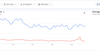
Our ROAS for the last 22 months (all of 2025 and 2026 so far) was 14x on Google. On Yelp? 3.6x.

We do a very good job of speed to lead and attribution across all platforms. Do some (that discovered us on Yelp) slip through the cracks untracked? Sure. But the growing Google vs Yelp gap is insane. Why would I spend another dollar on Yelp as a business owner? The "Account Manager" calls (from someone with no more a clue than you about the Yelp Black Box) to get you to spend more on ads.

The gap is so big between the two platforms, I've thought about my experiences the past couple weeks on both platforms. The big advantage right now on any platform is total engagement. Why? All AI engines — Gemini, ChatGPT, Claude, etc — want an abundance of real-time, real-world data to train against. Their users are overwhelmingly consumers who value recency and specific detail. You would think, considering this, that Yelp would want to do more to encourage engagement on the platform. All sorts of engagement. But it's the total opposite. Bad (even fake) reviews stay up. Legit (yes, unsolicited) reviews from legit customers get taken down. I suspect that Yelp almost wants a certain amount of negative reviews on their as well, to be able to build a contrast between businesses. Fair, but there's a right and wrong way to go about differentiating business for a user in discovery. The artificial review manipulation is a huge turn-off.

What it really comes down to is that, after the first point of contact with a business, the business has much more control than the platform over what platform the customer goes to after doing business. Yelp seems to be obsessed with removing reviews and squeezing as much out of its businesses as possible, not rewarding both sides of the market — users and businesses — for usage.

And the Yelp Ads pricing is, at best, comedic. You're paying for an ad, or online real estate of sorts. And you're paying for those ads no matter what. So the financial risk is there for the business owner regardless. But the upside if you're doing well with engagement on the platform? You have to pay more to keep your ad showing for the remainder of the billed month. This has been frustrating for my business, where the industry as a whole is slower specific months of the year and hotter in others. The pricing model is a perfect example of "the house always wins" and 100% of the risk is passed onto businesses, who unconditionally pay. And let's be clear, they're considering a website click, map view, or even a bookmark as a Yelp Ads Lead. Are they verified users / people? Yes. But Yelp's standard for lead qualification (and intent) is way lower than any other lead-gen platform we use; the Yelp Cost per Lead number is way worse than it looks. No, Yelp, I don't want to pay for someone to bookmark or upload a photo to my page. When it comes to pricing, if you're going to charge for an ad, let it just be an ad and charge for clicks on it. If you're going to play middle-man and charge for leads, whatever that means, then let that be your model and charge explicitly for those. But this limbo state where you're paying for both ad coverage and recklessly-counted leads really means that you're paying for neither.

It's just a constant game of tug-of-war with them and I'm sick of it. Dynamically managing my spend on a month-to-month basis to prevent ROAS from getting crushed. I'd rather deploy my hard-earned money towards a platform that objectively, consistently delivers value in excess of what it charges. That platform will not be Yelp.

Unfortunately, I doubt that a post like this does much of anything to move the needle. Too much inertia for a publicly-traded company, probably a lot of antiquated internal tech / dependencies, and quarter profit targets to hit for the shareholders. I'm mainly posting this out of curiosity of what other business owners think.

submitted by /u/KeepTheChief309
[link] [comments]